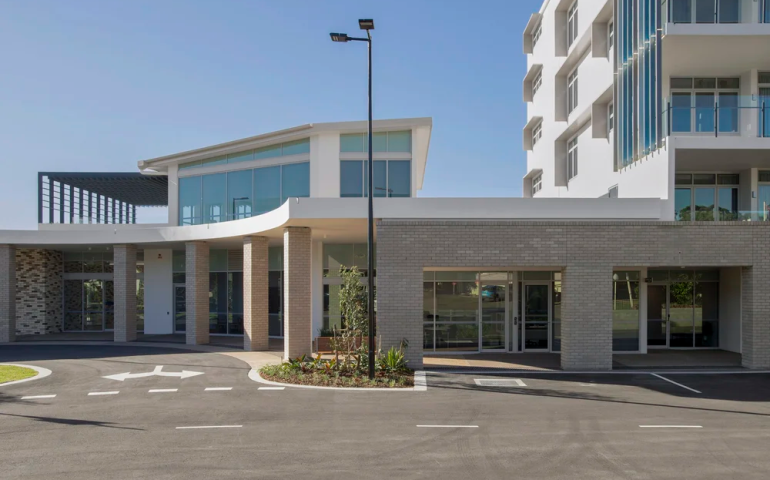
Architects and designers across Australia are embracing a new era of innovation as the Aged Care Act 2025 reshapes the built environment across the aged care sector.
Full implementation of the Act took place on 1st November, and a transformative shift is underway in how aged care facilities are designed, built, and secured, with new design principles that prioritise safety, autonomy and wellbeing.
Design Principles That Support Modern Aged Care Living
Capral National Manager Commercial Systems and Specification, Brendon Orth, said that Amplimesh was responding with solutions tailored for the next generation of aged care design which focused on intergeneration and biophilic design, vertical living and creating home-like environments.
“The Aged Care Act 2025 is a turning point for how we think about safety in the built environment,” Orth said. “We’re working closely with architects and developers to ensure our screen products integrate seamlessly into multi-storey aged care facilities, supporting both compliance and comfort, while promoting natural light, airflow, and connection to nature that are so vital in biophilic and intergenerational design. It’s about creating environments where residents feel safe, respected, and truly at home.”
Design Principles and Compliance Requirements
Facilities must support independent living, privacy, and freedom of movement, while ensuring accountability for environmental safety and accessibility. Orth explains, “The National Aged Care Design Principles and Guidelines (2024) are becoming standard practice for new builds, including access to outdoor areas and courtyards, which require certified screening.”
“Apart from new designs bringing nature into facilities, they also need to cater for the increasing number of Australians with dementia.” There are currently 433,000 Australians living with dementia and this is expected to increase to 812,500 by 2054. The Aged Care Act 2025 challenges the industry to rethink what care environments should feel like.
Lady Small Haven Retirement Village
Showcasing a vision of lively, integrated seniors’ living, The Churches of Christ Lady Small Haven Retirement Village at Benowa, Gold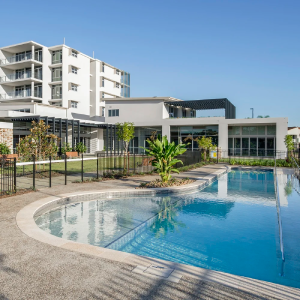 Coast, includes multi-storey buildings for independent living apartments and assisted living units, in addition to single-storey cottages, and an impressive suite of community facilities.
The project, in which Stage 1 of five Stages is complete, is a prime example of a well thought out, fit-for-purpose aged care facility, being Green Star rated, and featuring recreation and multipurpose entertaining rooms, an outdoor pool, clubhouse, café, hair and beauty salon, landscaped gardens and outdoor barbecue areas.
Interior design strategies create a dementia-friendly environment, and the independent living apartments open to the outdoors with generous windows offering outlook, light and natural ventilation. Integrating seamlessly with the design intent, Amplimesh SupaScreen window security systems made of Meshtec high tensile 316 Marine Grade Stainless Steel woven into a fine mesh, provide security and safety for residents, while allowing for airflow and ventilation.
“We’re seeing a surge in demand from architects who want to integrate safety features without sacrificing design intent. Screens are increasingly specified in multi-storey aged care builds, especially where fall prevention and airflow must coexist,” Orth said.
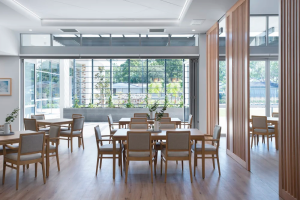 “The Churches of Christ Lady Small Haven Retirement Village is a great example of our compliant solutions that are unobtrusive, sustainable and engineered for the realities of aged care.”
Meeting the Needs of Vertical and Intergenerational Care
With a focus on dignity, autonomy and safety, Amplimesh will play a pivotal role in shaping the future of aged care and healthcare facilities. We’re seeing a rise in intergenerational integration – blending aged care with childcare, student housing and community hubs. At the same time, increasing urban density is driving facilities upwards, making secure balcony and window systems more important than ever.
Cairns Mental Health Facility
Recent projects, such as the $83 million Cairns Mental Health Facility, where Amplimesh Supascreen was used to enclose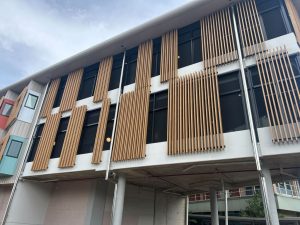 balconies, highlight the convergence of safety and architectural innovation. The facility includes sensory gardens, safe outdoor spaces, and bay windows in each room, as well as therapy and activity areas, an occupational therapy kitchen, and larger rooms to provide greater privacy. There is also a secure environment for residents to enjoy the natural environment with enclosed verandahs on the second floor, preventing falls and injuries.
“Amplimesh screens were specified for the Cairns project as a certified, compliant solution for fall prevention in multi-storey facilities, tested for fire attenuation, balustrade infill, and cyclone debris impact,” said Orth.
Evolving Regulations and Future Demand
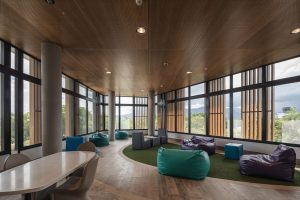 “It’s important that architects and builders stay informed as regulations change every year. While the 2025 Aged Care Act means more screens will be fitted to multi-level facilities for fall prevention, in the residential sector we will also see an increased demand for certified screens with the same design principles (safety, autonomy, dignity, connection to outdoors) that apply to aged care facilities, under the Support at Home Program.”
“Our mission is to support environments where older Australians can thrive. That means delivering products that meet rigorous safety standards while enhancing the aesthetic and functional goals of modern aged care design.”
For further information, visit www. https://amplimesh.com.au/.